
Can an Inflatable Building Withstand Snow?
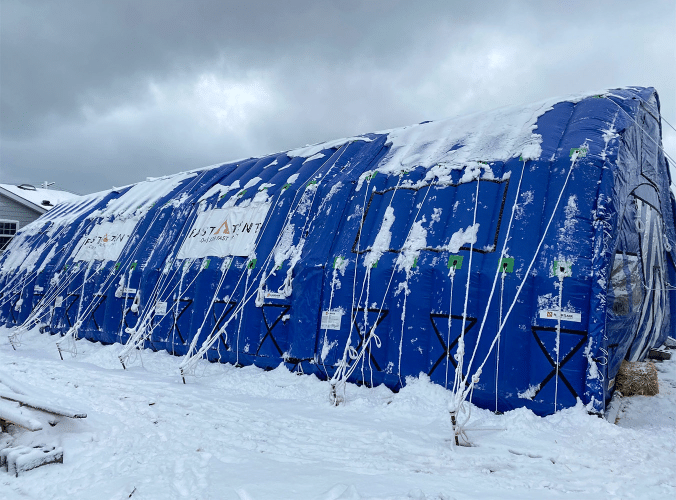
As temporary structures, inflatable buildings do not carry specific snow load ratings. The peaked roof is designed to shed snow. When the enclosure is heated and the fan is connected to the internal fill points, warm air circulates through the roof and walls, which helps stop snow and ice building up.
Air Pressure
Properly adjusting the inflation pressure is important. Overinflating or underinflating the structure can affect its ability to support additional loads, including snow.
In heavy snowfall, keep snow clear from around the base and the fan. For sites with heavy snowfall, talk to our team before ordering.
Loss of tent air pressure can be caused by the air blowers or the filler pipes being restricted by snow. As the snow slides off the roof of the tent it may build up around the base of the walls and bury the fan and filler pipe. With air flow restricted, the tent will not stay rigid and resistant to snow loads.
If more than 6” of snow is expected, then a protective box for the fan “a fan doghouse”should be utilised to elevate the fans out of the snow and protect them. Alternatively, the internal air fill points (located inside the tent) can be used to connect the air blowers. Internal air fill points mean that if the tent is heated, warm air can circulate throughout the roof and walls to further prevent accumulation of snow and ice.
If heavy snow is expected, using a second air blower on each tent module will increase pressure and resistance to snow loads. A secondary problem associated with snow and storms is loss of electrical power. This will cause the tent to deflate. If there are sharp protrusions underneath the tent such as re-bar, these may pierce and damage the tent. Pad these to prevent damage.